Wednesday, October 19, 2011

Book Review: The Little Match Girl, adapted and illustrated by Jerry Pinkney

My favorite tale by Hans Christian Anderson has always been The Little Match Girl. The poignancy, the helplessness...it moved me deeply as a child, and still does. Naturally, then, it was a story I wanted in my own library, to share with my daughters, but with so many versions, which to choose? It was blind serendipitous luck that the version I ordered, because the cover drew me in, was adapted and illustrated by Jerry Pinkney. I love it. And that seems like a feeble way to describe my emotional reaction to it.

It is an incredibly moving version, both the text and pictures. Set in a large turn-of-the-century American city, where horse-drawn carriages are sharing the road with automobiles, Pinkney's version highlights the poverty prevalent in such big cities. His match girl has a more homogeneous, easily overlooked face. But don't let that fool you into thinking this is a bland version. The pictures, to me, reflect the rough life of the poor. From the very first picture of the story that shows the fear and destitution and hopelessness on the children's faces as they work in the cold attic to make small bouquets of flowers to sell, to the hungry longing on the little girl's red-cheeked face as she stares at the food on a cart on another page, to her little hand cupped around the lit match as she sits on the snow covered sidewalk in her torn stockinged feet.... It a good thing you can't see me now; the emotion that his drawings evoke in me in really quite embarrassing.

And yes, my children love it, too.

Thank you, Jerry Pinkney, for making this hauntingly beautiful book.

Tuesday, October 4, 2011

Mini Book Reviews of Some of This Year's Reads

God Went to Beauty School
by Cynthia Rylant
ages 12 and up
I really enjoyed these poems. They are both fun and thought-provoking at the same time. A very intriguing image of God, although some critics may say it humanizes God too much.
by Clare Dunkle
ages 12 and up
I have never been able to get into Wuthering Heights, and since this book is billed as a prequel of sorts to Wuthering Heights, I'm probably missing something.  All in all, even without reading Wuthering Heights, it was a good ghost story. It definitely had the Gothic horror vibe going, if you like Gothic horror. I liked the story, and it held my interest, although the writing felt a bit choppy and incomplete at times. But maybe that's just a reflection of what the character felt. I liked the main character, Tabby, and was intrigued by how Dunkle wound her into the back story of Wuthering Heights.
by Cynthia Rylant
Ages 10 and up
I loved this book about a picturesque village God created as a "halfway house" for souls not ready to go to Heaven. This is a book of short stories about the residents of that village. Such good stories! Categorized as juvenile fiction, this is nevertheless a book anyone can enjoy. (And adults will probably appreciate it more.)
by Caroline Dale Snedeker
ages 8 and up
Newbery Honor Book
I expected to like this one more than I did. Especially given that it's a Newbery Honor book. The writing is excellent -albeit too long and wordy at times- and I like the character development. It was also an intriguing look into Quaker life.  The main male protagonist annoyed me no end. It was okay overall, good, even great in some places, but I struggled to stay interested enough to finish.

Monday, October 3, 2011

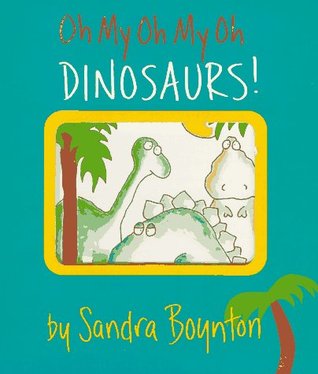
Sandra Boynton Love

Sandra Boynton is an expert at packing a party into a small room, so to speak. Her books are the perfect read for babies and restless toddlers: bouncy, catchy rhymes, cute pictures, quick read. They have been favorites with all my girls, and Susanna, although she is now officially a pre-schooler (she just turned four), still loves them and she insists on having them read to her. And as much as her sisters grumble about her love of them, they still come running when they hear me reading them, and they'll willingly (mostly) read them to her. The problem is, the books are so catchy and fun to read, that my older two read aloud with me, which results in a stereo effect and drives Susanna batty. I have to threaten expulsion of the older two every single time we read them.

Here are Susanna's three favorite, most requested Sandra Boynton books:
 
Kids learn more complicated opposites in a fun way.


A rollicking animal hoedown.
 
 
Featuring animal sounds

Sunday, October 2, 2011

Mini Reviews of More Books I Read In September


Children's Literature: A Reader's History From Aesop to Harry Potter by Seth Lerer. (Non-fiction)
I only got through about half of this book before it had to go back to the library. Very informative, but rather dry. I love reading about the ins and outs of children's literature, but this book is text dense, ponderous and heavy, and is not a quick read.
I feel like I should give it another chance, but not right now.


The Iron Man by Ted Hughes. (Middle Grade)
An odd little story; an allegory of peace, if you will. Despite being the inspiration of the animated movie The Iron Giant, the only resemblance between the two is the presence of a metal eating iron giant and the boy named Hogarth.

Ivy's Ever After by Dawn Lairamore. (Middle Grade)
This reminded me a little of the picture book The Paper Bag Princess. Plucky princess Ivy doesn't wait around to let life happen to her, especially when she learns that the prince who is supposed to rescue her from her dragon-guarded tower imprisonment is an evil jerk, and her word puzzle-loving dragon jailer turns out to be a real friend. Together, she and the dragon set off to find her fairy godmother to enlist her help in fighting the people plotting to take over her father's kingdom. I think this would make an excellent read-aloud for my girls, and I like that the story is about friendship, family, and resourcefulness. There is a sequel out just today called Ivy and the Meanstalk

The Peach Keeper by Sarah Addison Allen. (Adult Fiction)
I really enjoyed this story about two women in a small Southern town, connected through their grandmothers who were once best friends, brought together in a surprising friendship as they struggle to right old wrongs and forge new paths of community, belonging and love. It's a story that combines mystery, romance, coming-of-age, and just a touch of magic.

(I liked that the main character from Garden Spells, Allen's debut novel, made an brief appearance in the book.)

A feast of a book for illustration enthusiasts, highlighting a few of the very talented illustrators of children's literature. The "story" behind the art of: Hilary Knight, Trina Schart Hyman, Harry Bliss, David Shannon, Bryan Collier, Paul O. Zelinsky, Brian Selznick, David Wiesner, Betsy Lewin, Denise Fleming, and Lane Smith. Interesting and well-written. My only "complaint" is that I wish there were more artists featured. (It makes me sad that many of the books by Trina Schart Hyman are no longer in print.)


Drink, Slay, Love by Sarah Beth Durst. (Young Adult)
Pearl (please note the irony of a creature of death named for the jewel symbolizing purity and innocence) is a young vampire from an old and distinguished vampire family. When she is stabbed through the heart by a unicorn, her whole world shifts. Suddenly she can be out in sunlight without burning up. When a diabolical plan hatched by her scheming parents lands her in high school, Pearl finds herself developing a conscience and friends. What will happen when her two worlds collide?

Blood Spirits by Sherwood Smith. (Adult/Young Adult Fiction)
I was so excited to read this sequel to Coronets And Steel, that came out the week after I finished the first book. And I wasn't disappointed. Excellent writing, same great characters, excitement, faster paced (than the first book), and a satisfying conclusion. (At least I'm guessing it's the conclusion?)


Charles and Emma: The Darwin's Leap of Faith by Deborah Heiligman. (Non-Fiction)
A fascinating, excellently written, and thoroughly researched, enjoyable biography about the Darwin's life together.

Overbite by Meg Cabot. (Adult Fiction)
The sequel to Insatiable. I liked it okay, although I wasn't thrilled with where Cabot chose to take the story. Oh well. The writing seemed rushed, compared to her first book.


Anyone But You by Jennifer Crusie. (Adult Fiction)
My first Jennifer Crusie book. A fun, romantic story about an older divorced woman who reluctantly falls in lust/love with her younger downstairs neighbor. I liked it a lot. I'll be back for more from this author.


Amish Women: Lives and Stories by Louise Stoltzfus. (Non-Fiction)
A loving, intimate look at a few selected Amish Women, mostly in their own words, by a former member of their order. 


Caleb's Crossing by Geraldine Brooks (Adult Fiction)
A poignant, powerful look at life in early American history, as a young Puritan girl struggles with her place in the world, and her Native American friend is dragged, by circumstance, out of the life he knows. My first book by Brooks. Now I want to read her others.


The New York Regional Mormon Singles Halloween Dance by Elna Baker. (Non-Fiction/Memoir)
Elna Baker is a Mormon living in New York City, something her mother, especially, is not comfortable with. This is Elna's frank account of her life as she struggles with her religious identity and what it means to her.

Tuesday, September 27, 2011

5 Simple Steps to Fostering a Love of Reading: What I've Learned As I've Watched My Girls Teach Themselves to Read

This post was inspired by an excellent blog post at Fanny Harville's Unschool Academy, which talks about linear vs. non-linear reading with young readers (specifically, her son), or "dipping" into books as opposed to reading them straight through. "Dipping" into books is a very common practice of young readers, but often not talked about, let alone understood. It can cause anxiety on the part of parents, as Fanny forthrightly discusses in her post. Go read her post; it's an important topic. I have been mulling over the whole learning-to-read-naturally in general, but especially in regard to fostering a love of reading in my girls. Here are my thoughts on the issue and what the process looks like for us. Deep breath...here goes...


We adults spend so much time worrying about our children's reading abilities, that we've created complexities where there don't need to be.

First, keep in mind two things:

Children learn to read when they have an internal incentive to do so. Sure, they can be forced into reading at home or in school, but children who are forced to read and never given the chance to foster the internal DESIRE to read, do not read well or voluntarily, for their own enjoyment. I think this is where public/private schools fail: they force kids through plodding, boring reading exercises that tend to kill the love of reading rather than foster it.

Children are hard-wired with curious minds that yearn to "de-code" the world they live in, IF they are free to de-code it in their own way. The desire to read, if fostered gently, is a natural corollary of that need to "de-code" life. It doesn't have to be a painful, unpleasant process. And it doesn't need to be forced or fretted over. We need to trust in that innate desire to learn. They will ask for the help they need. ("Mom, what does ... spell?") And parents can take opportunities to teach very brief "lessons" here and there, as the opportunity and need arises. (For example, I taught my girls their vowels to the tune of "Old MacDonald".) Do NOT belabor the point. This is about their learning in their way, not about you and your desire to impart knowledge and wisdom. (Where we, in this country, got the idea that children have to be able to read by the time they're ages five or six, I don't know. But I think it's asinine to assume that every child should be ready to read at age five.)

5 of the best, most effective ways to instill and develop a love of reading:

   1. Provide a text-rich environment.
This means having books in your home, and making frequent trips to the library. It means that your children need to see you reading books for fun. Children who witness their parents reading for pleasure absorb that this is a desired activity, especially when they see their same-gendered parent reading. (This is especially true of boys.)

   2. Strew, or strategically scatter (spread around the house, on obvious surfaces) a mixture of reading materials (e.g. magazines, specific books, maps, phone books, etc.)
A marketing strategy that works! A variety of materials gives kids experience and familiarity with text in all its various forms. And opens doors of discovery and discussion, and new interests.

   3. Read aloud to your children DAILY with expression, proper syntax and cadence.
Let me point out that audiobooks are good, but they should never replace YOU, as the read aloud adult. There is something about the physical act of reading aloud with your children sitting beside you or near you that helps their brains process the reading experience in a personal way. If your child is in a two parent home, both of you should be reading aloud to your children. It broadens their "de-coders" to hear books read "live" by different people. If you can do only one thing from this list, make it this one. Reading aloud with expression plays a HUGE role in your child's reading and language development, and is absolutely essential to foster a love of reading. This step is also key to keeping alive the love of reading in your pubescent boys, who for some reason frequently become more averse to reading for pleasure during middle grade years.

   4. Limit your children's viewing of television and their online/video gaming activity.
This is especially important in those early, pre-reading years. I know this advice will not be popular in some quarters, but TV, computers, and video gaming teach a child's brain to rely on extremely quick, constantly changing images and functions, in other words, rapid stimulation. Children who live in visual media-intense households have very little or no patience with text-rich experiences, becasue their brains haven't built those pathways. Books to media-saturated kids are boring compared to constant, ever-changing images. I have seen this time and again as the common denominator over the years with friends who lament their child's disinterest in books and reading.

   5. Find books that appeal to them, that they want to pick up and look at, regardless of the "reading level."
Yes, this includes comics. This doesn't have to be books that necessarily appeal to you and your desire to introduce them to "good" literature. If the reading level of the book they want to read is beyond their ability, or all they seem to want to read are books below their reading level, don't stress. It is the physical act of reading a desired book that is so critical. Also know that you don't have to read everything out loud. It helps keep their interest piqued if there are books that they want to read, but you won't read. I'm speaking here of kids ages 4 and up. If your baby or toddler brings you a book to read, read it, no matter what. If it's one you don't want to read, you can grab a more desirable one, and simply say "How about we read this one instead?" And if they bring you something that you know isn't going to keep them interested for long, just pull them on your lap and talk about the pictures or what's happening in the story.
  
There you have it: simple steps you can take to foster a love of reading. Your kids will take it from there. Relax and enjoy the ride. (But keep the books coming.)

 Questions? Concerns? Comments?

(Also check out an earlier post Reading Aloud: The "Secret" to Reading Success.)

Saturday, September 24, 2011

Book Review: The Walloping Window-blind, Adapted and Illustrated by Jim LaMarche


A capital ship for an ocean trip
   Was "The Walloping Window-blind;"
No gale that blew dismayed her crew
   Or troubled the captain's mind.

This picture book is Jim LaMarche's adaptation and pictorial vision of Charles E. Carryl's fun, rollicking, nonsensical, sea shanty-ish adventure poem, first written in 1885. My girls, who groaningly interrupted me after the first stanza with "Is this a rhyming book?" soon got into the swing of the poem, greatly aided by LaMarche's funny, imaginative illustrations featuring kids as the captain and crew of the Walloping Window-blind.

This is a poem I remember from my childhood, that I'd all but forgotten until I saw this book at the library. (It was made into a folk song at some point, and I remember hearing it on an LP record when I was young.) The poem has been "adapted" (i.e. changed) slightly from the original, in places, to reflect a more universal, PC appeal. It's not something that would necessarily bother other people, but I don't, as a general rule, like it when the words of an author are "updated" for PC purposes. I understand the reason for it (mostly), but I don't approve. (She said, with her nose in the air.) To me, it's changing the historic record. In all fairness, my peevishness aside, I think the changes are well done, and in keeping with the general spirit of the poem. And I adore LaMarche's kid crew; their facial expressions are priceless.


The Walloping Window-blind
(The original version)
by Charles E. Carryl

A capital ship for an ocean trip
   Was "The Walloping Window-blind;"
No gale that blew dismayed her crew
   Or troubled the captain's mind.

The man at the wheel was taught to feel
   Contempt for the wildest blow,
And it often appeared, when the weather had cleared,
   That he'd been in his bunk below.

The boatswain's mate was very sedate,
   Yet fond of amusement, too;
And he played hop-scotch with the starboard watch
   While the captain tickled the crew.

And the gunner we had was apparently mad,
   For he sat on the after-rail,
And fired salutes with the captain's boots,
   In the teeth of the booming gale.

The captain sat in a commodore's hat,
   And dined, in a royal way,
On toasted pigs and pickles and figs
   And gummery bread, each day.

But the cook was Dutch, and behaved as such;
   For the food that he gave the crew
Was a number of tons of hot-cross buns,
   Chopped up with sugar and glue.

And we all felt ill as mariners will,
   On a diet that's cheap and rude;
And we shivered and shook as we dipped the cook
   In a tub of his gluesome food.

Then nautical pride we laid aside,
   And we cast the vessel ashore
On the Gulliby Isles, where the Poohpoo smiles,
   And the Anagazanders roar.
 
Composed of sand was that favored land,
   And trimmed with cinnamon straws;
And pink and blue was the pleasing hue
   Of the Tickletoeteaser's claws.

And we sat on the edge of the sandy ledge
   And shot at the whistling bee;
And the Binnacle-bats wore water-proof hats
   as they danced in the sounding sea.

On rubagub bark, from dawn to dark,
   We fed, till we all had grown
Uncommonly shrunk, - when a Chinese junk
   Came by from the torriby zone.

She was stubby and square, but we didn't much care,
   And we cheerily put to sea;
And we left the crew of the junk to chew
   The bark of the rubagub tree.